
How to Use AI Video to Increase E-Commerce Sales? A Guide to Demos, Ads & Listings in 2026
Product pages with video convert 65% higher than those without. But producing enough video to cover your catalog is brutally expensive the traditional way. AI changes the math. Here's how.

The data is clear: video sells products
Every e-commerce team knows video is "important." But the conversion data for 2026 makes the case sharper than most people realize.
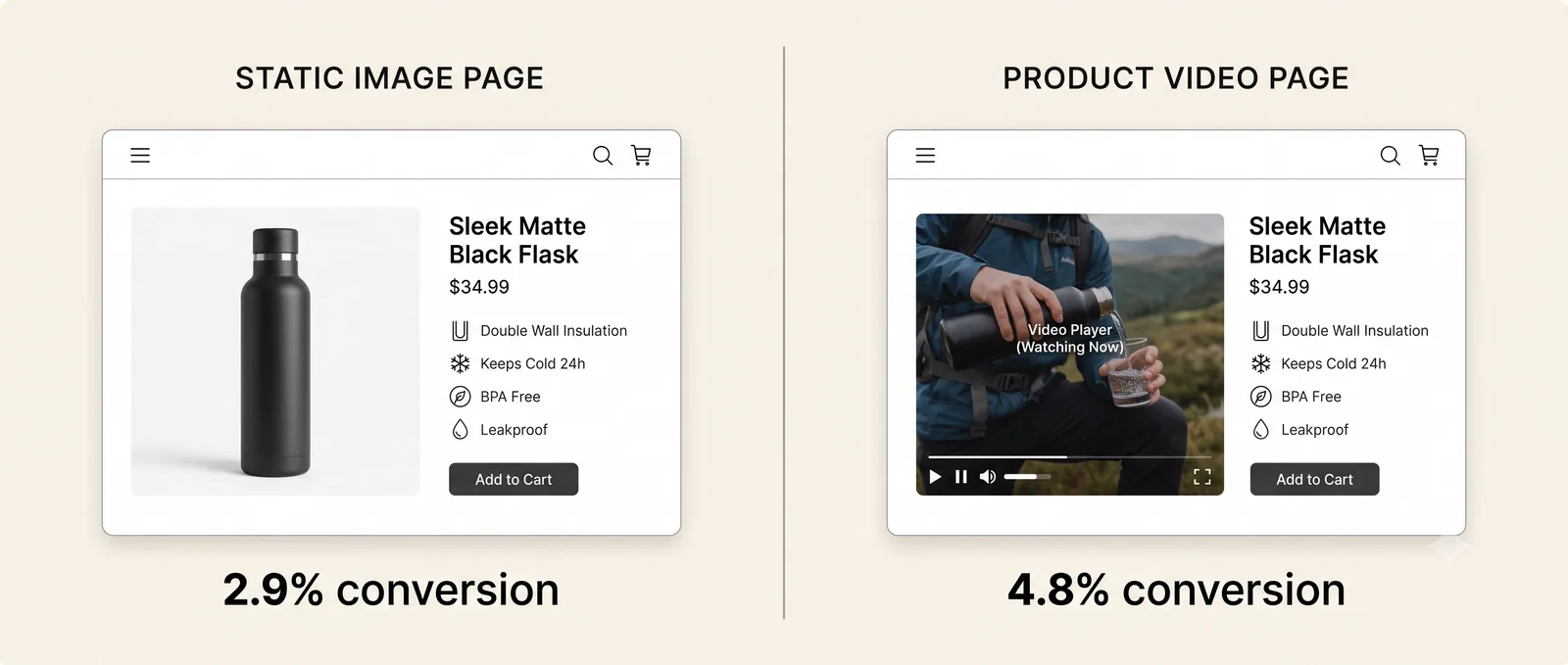
Product pages with video achieve an average conversion rate of 4.8% versus 2.9% for pages without, a 65% lift from video alone (WebFX data via Rocketium, 2026). Shoppers are 144% more likely to add a product to cart after watching a product video (Invesp via Xictron, 2026). And 85% of consumers say they have been convinced to buy a product or service after watching a video (Wyzowl 2026 via SellersCommerce).
The 85% number is the one that matters most. It means video is not a nice-to-have brand exercise. It is a direct conversion lever. Every product page without video is leaving measurable revenue on the table.
And it gets more interesting. 62% of consumers watch product review videos before purchasing. Shoppers who view product video are 85% more likely to buy (WiFi Talents, 2026). Landing pages with embedded video convert at up to 86% higher rates than text-only equivalents. These numbers are consistent across sources and methodologies.
The problem is not awareness. Every brand knows video converts. The problem is production.
Five types of e-commerce video that actually convert
Not all product video is created equal. The format matters as much as the production quality. Here are the five types that move the conversion needle, ranked by impact on purchase behavior.
1. Product demos (the highest-converting format)
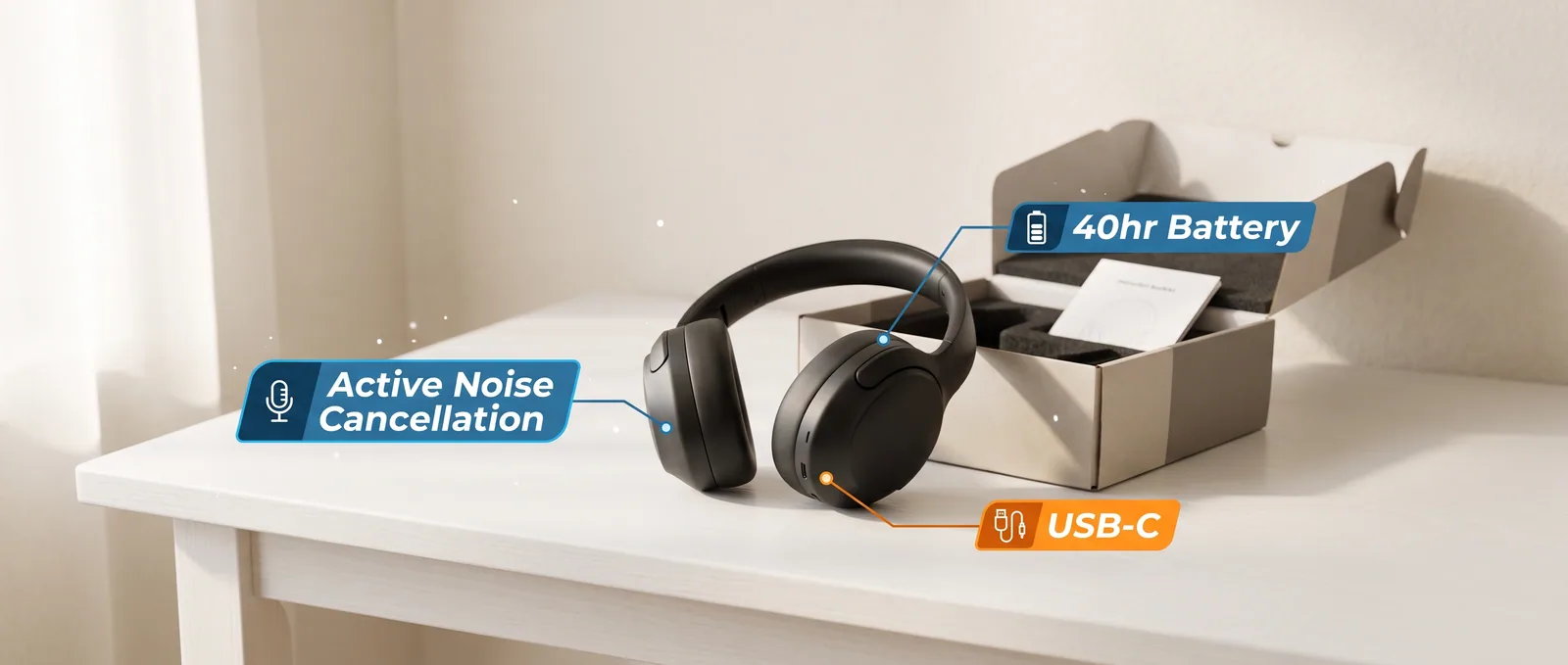
A product demo shows the item in use, from unboxing through real-world application. It answers the question every buyer has: "What is this actually like?" Demos are the highest-converting video format for mid-to-high consideration products because they reduce uncertainty, the single biggest barrier to online purchase. A well-produced 30 to 60-second demo on a product detail page can lift add-to-cart rates by 20 to 60% depending on the product category.
2. Lifestyle and social clips
Short-form lifestyle clips (15 to 30 seconds) show the product in context: being worn, used in a kitchen, placed on a desk, worn at a gym. They work best for impulse purchases and lower-priced items where the buyer needs to imagine ownership, not understand features. These are the clips that perform on TikTok, Reels, and Shorts.
3. Comparison and "versus" videos
Comparison videos place your product next to competitors or previous versions. They work exceptionally well in crowded categories (skincare, supplements, tech accessories) where buyers are actively evaluating options. The key: be specific and honest. Comparisons that feel like ads underperform. Comparisons that feel like genuine evaluations build trust.
4. Explainer and how-to videos
For complex or technical products, explainer videos reduce the cognitive load that kills conversions. If a buyer has to read three paragraphs to understand what your product does, you will lose them. A 45-second explainer that shows the product solving a specific problem converts better than any amount of bullet-point copy.
5. UGC-style ads
User-generated content (or AI content that mimics the UGC aesthetic) drives performance ads. The informal, authentic feel outperforms polished brand ads on social platforms. UGC-based ads get 4x higher click-through rates than standard brand content (Kapwing, 2026).
Which format to start with: If you have zero product video today, start with product demos for your top 10 SKUs. This is where the conversion lift is largest and most measurable. Once those are live, add social clips for TikTok/Reels and UGC-style creative for paid ads.
The production bottleneck most e-commerce teams face
The typical e-commerce brand has hundreds or thousands of SKUs. Producing traditional product video for even a fraction of that catalog is prohibitively expensive.
A professionally produced 60-second product video costs $3,000 to $10,000 through an agency and $500 to $2,000 through a freelancer (Sovran, March 2026). That means covering just 50 products costs $25,000 to $100,000 in production alone. Most mid-market e-commerce brands allocate that much to their entire annual video budget.
The result: video coverage is spotty. Top sellers get demos. The long tail of the catalog sits with static images and text descriptions, converting at half the rate they could.
AI tools reduce per-video costs by 70 to 90%. That is the difference between covering 10 SKUs and covering 200.
How to produce e-commerce video with AI
Here's the workflow we use with Craze to produce product videos at catalog scale. The same process works for product demos, social clips, and performance ad creative.
Brief the product, not the video
Start by describing the product, the target buyer, and the single job this video needs to do. Example: "A 20-second product demo for our ceramic pour-over coffee maker, for the product detail page, showing the brewing process from pour to cup, targeting home coffee enthusiasts, calm and premium feel."
Craze interprets the brief, asks clarifying questions (aspect ratio, platform, tone), and builds a story outline. You approve the creative direction before anything is produced.
Generate product visuals and footage
Craze generates reference images to lock the visual identity (the product styling, lighting, environment), then produces video clips using AI models like Kling O3 Pro and Seedance 2.5. It generates voiceover using ElevenLabs V3, background music using ElevenLabs Music, and additional product images using GPT Image 2.
For e-commerce specifically, this is where AI provides the most value. Traditional product shoots require a photographer, a studio, lighting equipment, and post-production for every single SKU. AI generates product-in-context footage from a text description.
Assemble and refine on the timeline
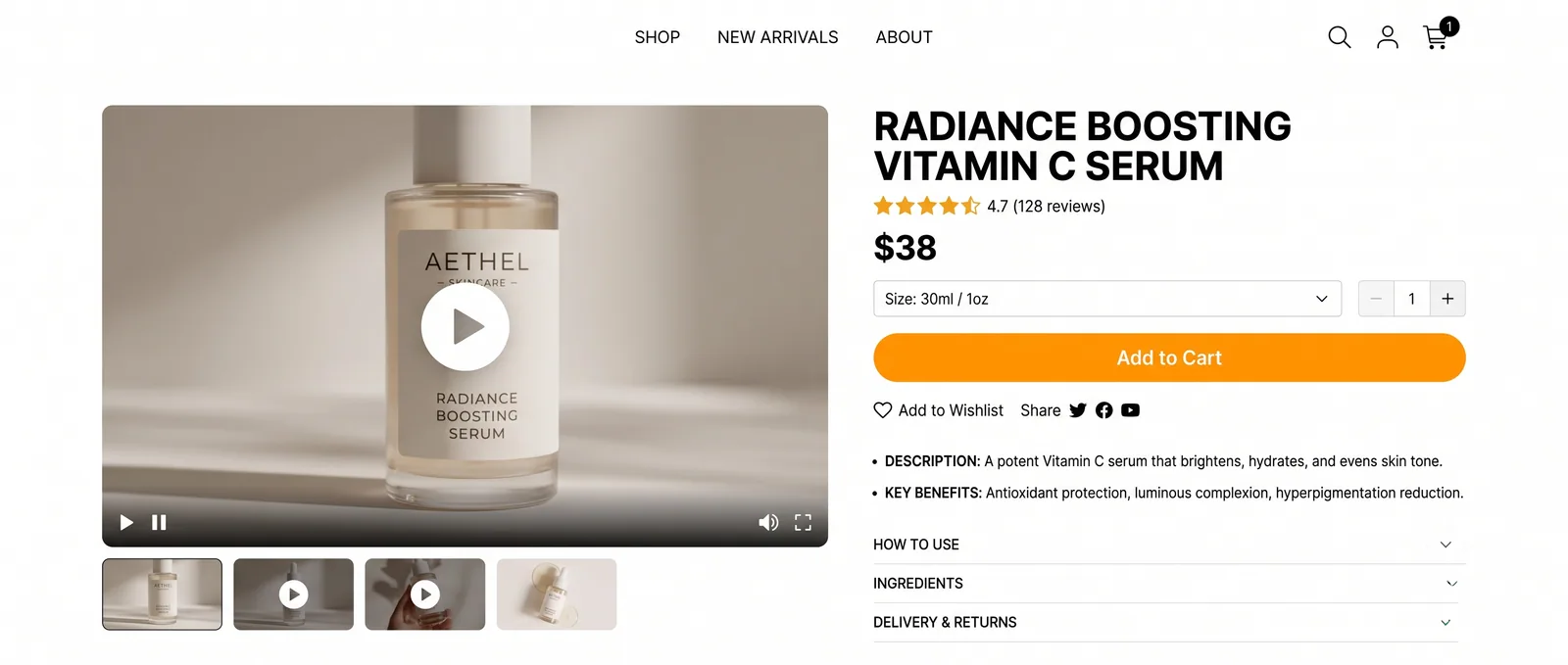
Craze assembles the assets on a multi-track timeline with captions and sound design. You review the cut, fine-tune timing, add transitions, and adjust color presets. The full professional editor is there if you need it.
Export variants for every channel
Export in 1:1 square for product pages, 9:16 vertical for TikTok and Reels, and 16:9 horizontal for YouTube. Unlimited exports are included in the $19/month plan. Create a product demo, a 15-second social clip, and a UGC-style ad for the same product in a single session.
Product pages and marketplace listings
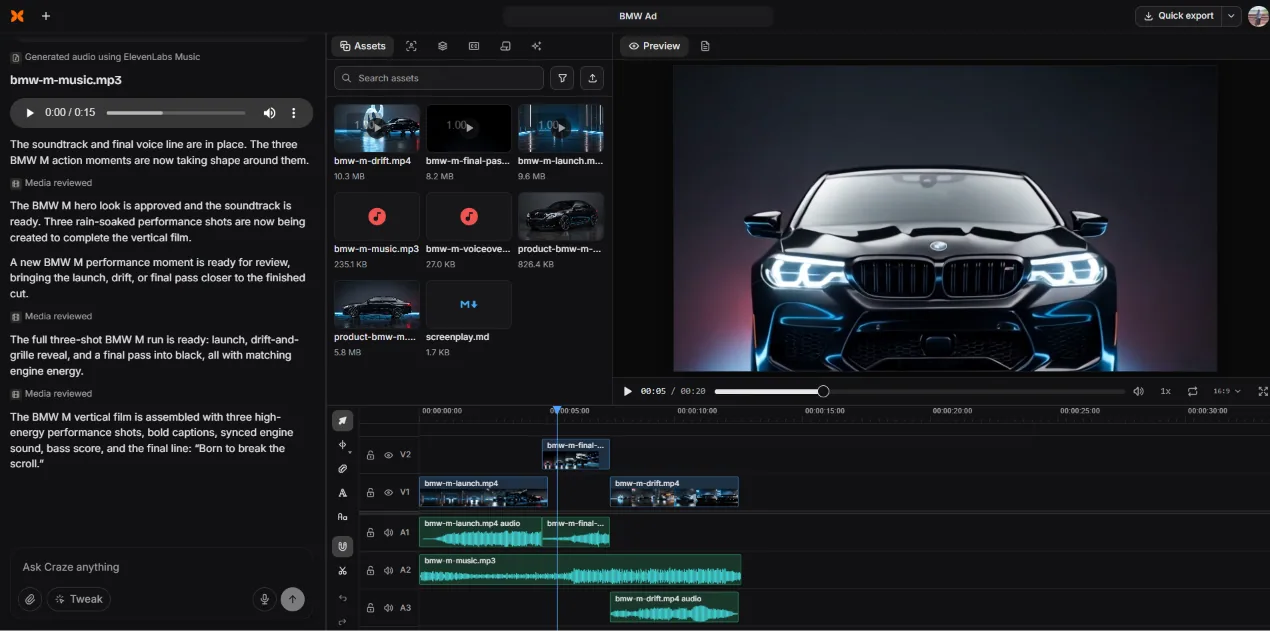
Product detail page (PDP) video has the most direct, measurable impact on revenue. A well-placed video on a product page lifts conversion by 20 to 80% depending on the product category and video quality (Xictron, 2026).
For PDP video specifically:
- Keep it under 60 seconds. Shoppers on a product page are evaluating, not browsing. They want to see the product quickly and decide. Longer videos get abandoned.
- Show the product in use, not just on display. Static beauty shots are better as images. Video's job is to show movement, scale, texture, and real-world context.
- Address the top objection. Every product has one or two common objections ("Is it really that small?", "Will this work on my skin type?", "How loud is it?"). A video that answers the number-one objection converts higher than a generic overview.
- Auto-play muted with captions. Most PDP video auto-plays. If the message only works with sound, you lose most viewers. Caption everything.
On marketplaces like Amazon, Shopify, and Etsy, video on listings increases time on page by 81% and drives 41% more traffic from search. Amazon A+ Content with video consistently outperforms text-only listings in the same category.
Performance ads: variant testing at scale
The economics of performance advertising in 2026 come down to one principle: creative quality accounts for 56% of sales lift from digital ad campaigns, more than media placement or targeting combined (Nielsen data via Sovran, 2026).
But only 5 to 10% of tested ad creatives actually scale. The rest underperform. This means volume matters. The more variants you test, the more likely you are to find a winner. And AI is the only way to produce that volume at a viable cost.
Smartly reports that 95% of performance marketers are testing AI for creative production in 2026, with AI-powered personalization saving teams 42 minutes per hour (Sovran, 2026). Wistia's data shows AI adoption for video creation jumped from 18% to 41% of brands in a single year.
The practical workflow: produce five ad variants for the same product in one session (different hooks, different closing CTAs, different music), launch all five, kill the underperformers within 48 hours, and iterate from the winner. With AI, this costs less than a single traditional ad production.
| Method | Cost per variant | 10 variants/month | Turnaround |
|---|---|---|---|
| Agency production | $2,000 to $10,000 | $20,000 to $100,000 | 2 to 4 weeks |
| Freelance editor | $300 to $1,000 | $3,000 to $10,000 | 3 to 7 days each |
| UGC creator | $150 to $500 | $1,500 to $5,000 | 5 to 10 days each |
| AI with Craze | ~$4 to $10 | $19/mo flat | 3 to 10 minutes each |
Social commerce: TikTok Shop and the video-first storefront
The biggest shift in e-commerce video is the rise of social commerce, where the video IS the storefront. TikTok Shop's global GMV reached $64.3 billion in 2025, nearly doubling year-over-year, and is projected to surpass $112 billion in 2026. The US market alone contributed $15.1 billion.
On TikTok Shop, short-form video content drives nearly 60% of all platform sales (AutoFaceless, 2026). Live shopping events convert at 9.5 to 15.2%, which is 6 to 10x higher than standard e-commerce conversion rates (Web Tonic, 2026).
For e-commerce brands, this means product video is no longer something you put on a product page and forget about. It is the primary sales channel on the fastest-growing commerce platform in the world. The brands producing the most product video for TikTok Shop are the ones capturing disproportionate market share.
TikTok Shop insight: Affiliate content drives 42% of TikTok Shop GMV. Micro-influencers with under 50,000 followers see a 30.1% engagement rate for affiliate links (Capital One data via Clouted, 2026). For brands with limited budgets, AI-generated product video combined with micro-creator distribution is the highest-leverage social commerce strategy available right now.
How TikTok Shop works for sellers. Social commerce is the fastest-growing e-commerce channel in 2026.
Best AI tools for e-commerce video
Not every AI video tool is built for e-commerce. Some generate clips but don't understand product storytelling. Here's what works for the specific demands of product video.
Craze handles the full e-commerce video pipeline: creative planning, AI generation (video, voiceover, music, product images), and professional timeline editing. You describe the product and the audience, and Craze builds the video from scratch. It is the only tool on this list that plans the creative, generates all assets, and assembles a final cut. $19/month flat, unlimited exports. Best for product demos, social commerce clips, and performance ad variants at scale.
CapCut works well for editing existing product footage into social-ready clips. Its template library is built for TikTok (no surprise, since ByteDance owns both). The free tier covers basic editing with 1080p export. It does not generate footage.
Runway produces high-quality AI video clips that can serve as B-roll or product-in-context footage. It does not edit or assemble. You take the clip into a separate editor for the final cut.
Descript is useful if your e-commerce video workflow involves talking-head product reviews or unboxing recordings. Transcript-based editing and audio cleanup make post-production fast. It does not generate footage.
Mistakes that kill e-commerce video conversions
Making the video about the brand, not the product. E-commerce video has one job: help the buyer decide. Brand storytelling has its place, but a product page video that spends 20 seconds on brand messaging before showing the product has already lost most viewers. Lead with the product.
Using the same video everywhere. A 60-second product demo works on the PDP. It does not work as a TikTok ad. Platform-native formatting (aspect ratio, pacing, hook style) is not optional. Create variants tuned to each placement.
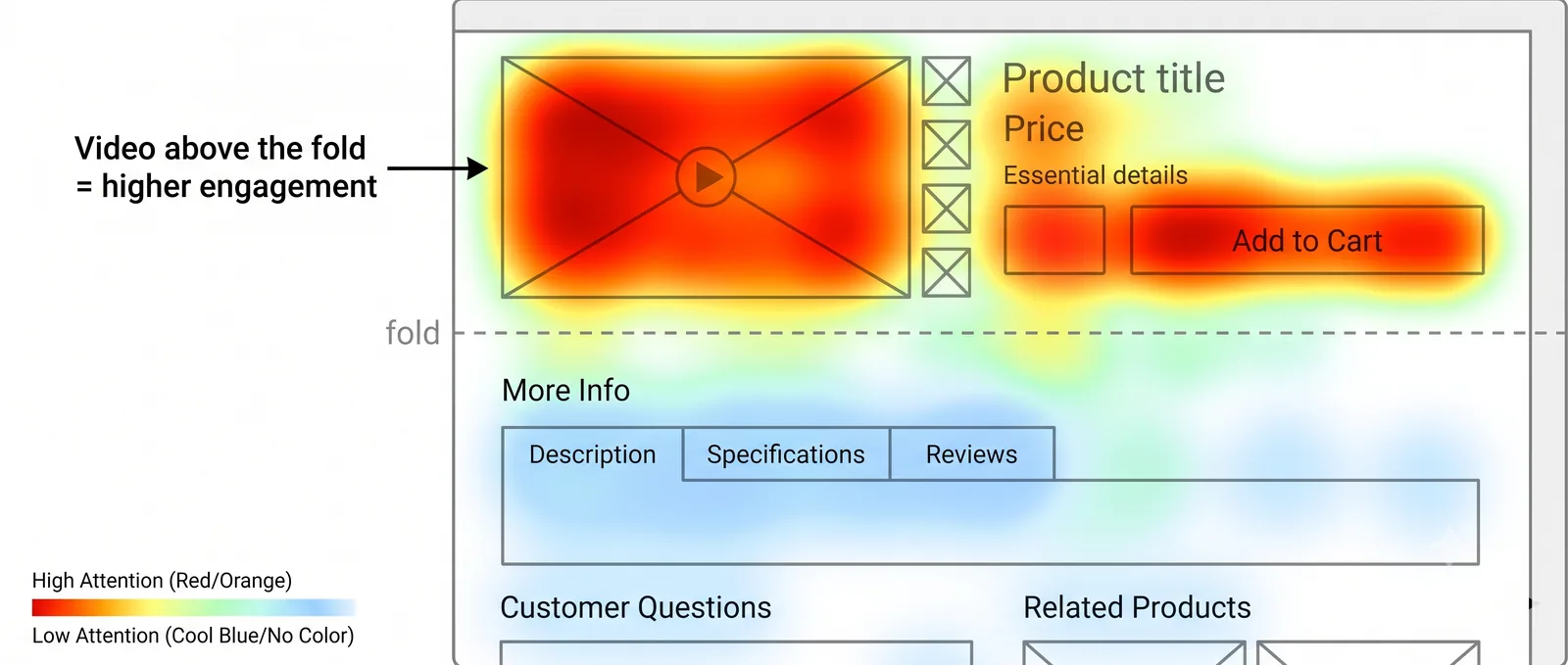
Hiding video below the fold. Video placed above the fold, near the add-to-cart button, converts significantly higher than video buried in a "media" tab at the bottom of the page. Treat video as a primary selling element, not a supplementary asset.
Producing one video per product and stopping. The best-performing e-commerce video programs test multiple angles per product: a demo, a lifestyle clip, a comparison, a 15-second ad. One video is better than none. Five videos per SKU is where the real conversion lift happens.
Skipping captions. Most e-commerce video is watched muted, whether on a product page or in a social feed. If your message depends on audio, you lose the majority of viewers. Always add captions.
Start producing product video at scale
Craze plans, generates, and edits your product demos, social clips, and ad creative from a brief.
$19/month, flat. No tiers. Unlimited exports.